Learning hacks
How to Practice Speaking Spanish Alone (And Actually Improve)
How to Practice Speaking Spanish Alone (And Actually Improve)
3
min read
The Reality of Learning Alone
A lot of the students I work with didn’t start with a teacher.
They started alone.
With apps, videos, podcasts—sometimes very consistently. And to be fair, that consistency gives them something valuable: exposure, familiarity, a sense that the language is not completely foreign anymore.
But when we shift to speaking, something becomes very clear.
They’ve spent a lot of time around Spanish—but very little time actually producing it.
That distinction matters more than most people expect.
Why Most “Solo Practice” Doesn’t Work
When you’re learning on your own, it’s very easy to stay in passive modes.
You watch, you read, you listen. You might even repeat things occasionally. It feels productive, and in some ways it is.
But speaking is not built through recognition.
It’s built through output.
And if your practice doesn’t require you to actively produce language, then your speaking ability stays underdeveloped—no matter how much you understand.
This is the same pattern I often see in students who come from AI tools. They’ve interacted with the language, but not in a way that forces real-time expression. I explain this more in depth when I talk about AI and fluency, because the pattern is almost identical.
What Actually Changes When You Start Speaking Alone
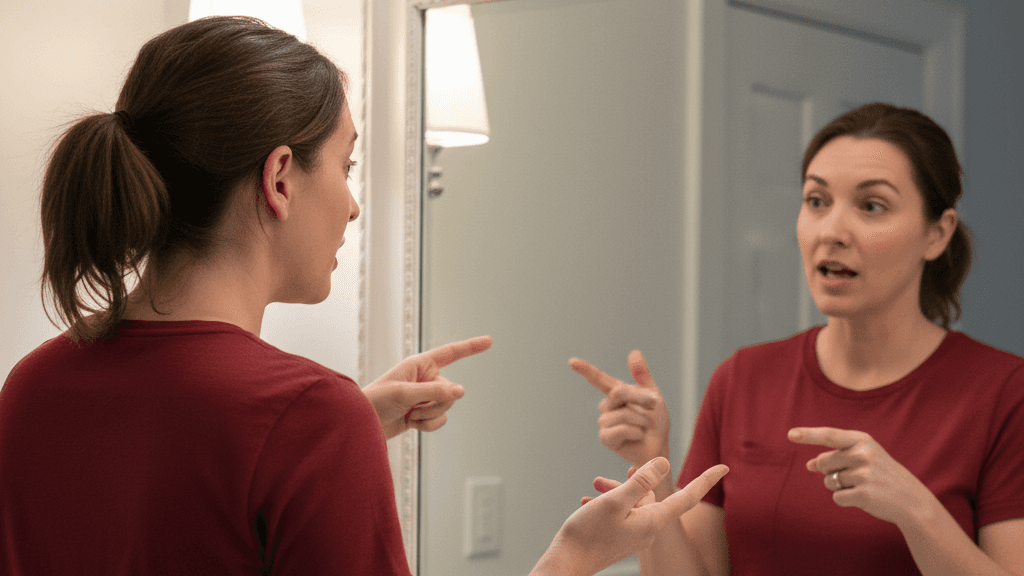
The first time you try to speak out loud on your own, it usually feels uncomfortable.
You pause more than you expect.
You simplify your ideas.
You notice gaps immediately.
That discomfort is useful.
It’s the moment where your brain shifts from recognizing Spanish to building it.
A More Structured Way to Practice
What has worked best for my students is not random speaking, but structured output.
Instead of asking yourself to “just talk,” you give your brain a clear direction.
You describe your day. You explain your plans. You give your opinion about something simple. The goal is not complexity—it’s consistency.
Over time, those small repetitions start to form patterns. And patterns are what reduce hesitation.
Simulating Real Situations
One of the most effective things you can do alone is simulate real-life interactions.
You don’t need a partner to practice ordering at a café, introducing yourself, or asking for help. You can run those scenarios out loud, repeatedly, until they feel natural.
When you later encounter them in real life, they’re no longer new.
They’re familiar.
Recording Yourself (And Why It Matters)
This is the part most people avoid.
Recording yourself forces a level of awareness that passive learning never gives you. You hear your pauses, your pronunciation, your rhythm.
It’s not always comfortable, but it’s one of the fastest ways to improve clarity.
Where Solo Practice Reaches Its Limit
At some point, though, something shifts.
You can build structure, confidence, and familiarity on your own. But interaction introduces a different layer: unpredictability.
Someone else controls part of the conversation. You have to react, not just produce.
That’s usually the moment where learners feel stuck again. Not because they didn’t practice—but because they haven’t practiced reacting.
This is also where many people realize they’re still translating in their head, even if they’ve improved in other areas. If that’s the case, it’s worth addressing that habit directly, because it becomes the next bottleneck.
Final Thought
Practicing alone can take you much further than most people think.
But only if it includes real output.
At some point, fluency stops being about preparation and becomes about interaction. That transition is where most learners either move forward—or stay stuck.
If you want structured speaking practice that goes beyond solo training: explore my coaching programs!
The Reality of Learning Alone
A lot of the students I work with didn’t start with a teacher.
They started alone.
With apps, videos, podcasts—sometimes very consistently. And to be fair, that consistency gives them something valuable: exposure, familiarity, a sense that the language is not completely foreign anymore.
But when we shift to speaking, something becomes very clear.
They’ve spent a lot of time around Spanish—but very little time actually producing it.
That distinction matters more than most people expect.
Why Most “Solo Practice” Doesn’t Work
When you’re learning on your own, it’s very easy to stay in passive modes.
You watch, you read, you listen. You might even repeat things occasionally. It feels productive, and in some ways it is.
But speaking is not built through recognition.
It’s built through output.
And if your practice doesn’t require you to actively produce language, then your speaking ability stays underdeveloped—no matter how much you understand.
This is the same pattern I often see in students who come from AI tools. They’ve interacted with the language, but not in a way that forces real-time expression. I explain this more in depth when I talk about AI and fluency, because the pattern is almost identical.
What Actually Changes When You Start Speaking Alone
The first time you try to speak out loud on your own, it usually feels uncomfortable.
You pause more than you expect.
You simplify your ideas.
You notice gaps immediately.
That discomfort is useful.
It’s the moment where your brain shifts from recognizing Spanish to building it.
A More Structured Way to Practice
What has worked best for my students is not random speaking, but structured output.
Instead of asking yourself to “just talk,” you give your brain a clear direction.
You describe your day. You explain your plans. You give your opinion about something simple. The goal is not complexity—it’s consistency.
Over time, those small repetitions start to form patterns. And patterns are what reduce hesitation.
Simulating Real Situations
One of the most effective things you can do alone is simulate real-life interactions.
You don’t need a partner to practice ordering at a café, introducing yourself, or asking for help. You can run those scenarios out loud, repeatedly, until they feel natural.
When you later encounter them in real life, they’re no longer new.
They’re familiar.
Recording Yourself (And Why It Matters)
This is the part most people avoid.
Recording yourself forces a level of awareness that passive learning never gives you. You hear your pauses, your pronunciation, your rhythm.
It’s not always comfortable, but it’s one of the fastest ways to improve clarity.
Where Solo Practice Reaches Its Limit
At some point, though, something shifts.
You can build structure, confidence, and familiarity on your own. But interaction introduces a different layer: unpredictability.
Someone else controls part of the conversation. You have to react, not just produce.
That’s usually the moment where learners feel stuck again. Not because they didn’t practice—but because they haven’t practiced reacting.
This is also where many people realize they’re still translating in their head, even if they’ve improved in other areas. If that’s the case, it’s worth addressing that habit directly, because it becomes the next bottleneck.
Final Thought
Practicing alone can take you much further than most people think.
But only if it includes real output.
At some point, fluency stops being about preparation and becomes about interaction. That transition is where most learners either move forward—or stay stuck.
If you want structured speaking practice that goes beyond solo training: explore my coaching programs!

Written by Rocío Daniela Castro
Written by Rocío Daniela Castro


